Tree Trimming & Pruning
Trimming and pruning keep a tree healthy, safe and the right shape for where it stands. It means taking out dead and diseased wood, improving the structure so the tree carries its own weight properly, and getting limbs off the things they shouldn’t be over. David’s Tree Service has been pruning trees around Lynch Station and Lynchburg since 1993.
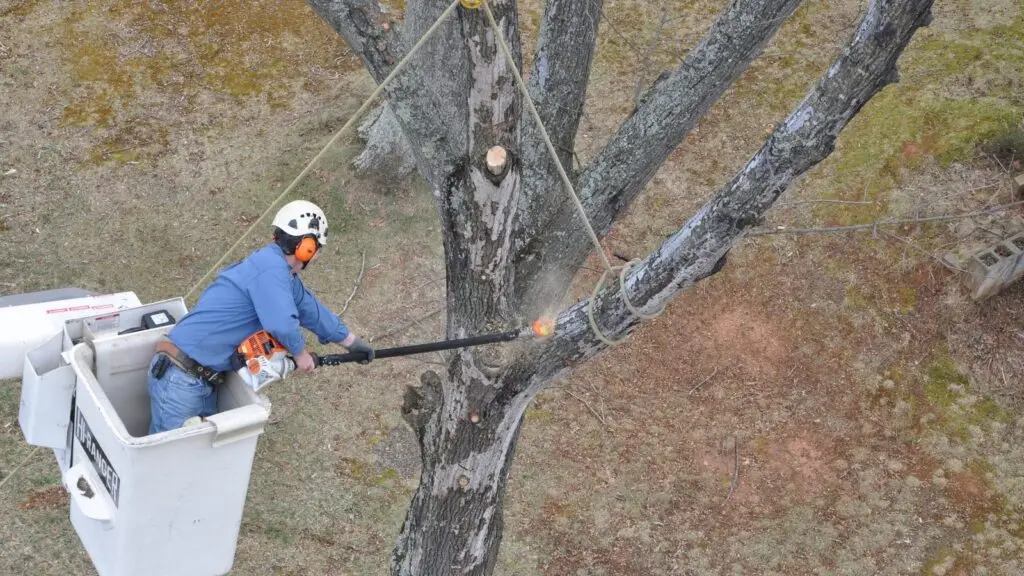
Tree trimming and pruning in Lynch Station and central Virginia
Trimming and pruning keep a tree healthy, safe and the right shape for where it stands. It means taking out dead and diseased wood, improving the structure so the tree carries its own weight properly, and getting limbs off the things they shouldn’t be over. David’s Tree Service has been pruning trees around Lynch Station and Lynchburg since 1993.
Call 540-297-3454 for a free estimate.
Why it's worth doing before you need it
Most of the emergency calls we run in the summer are limbs that had been dead for two years. A tree sheds its dead wood eventually, and it picks the moment. Usually that’s the first real wind after a wet spell.
Pruning ahead of that is the cheapest tree work there is. Taking a dead limb off a red maple on a Tuesday costs a fraction of what it costs to get the same limb off your roof on a Sunday night, plus the roof.
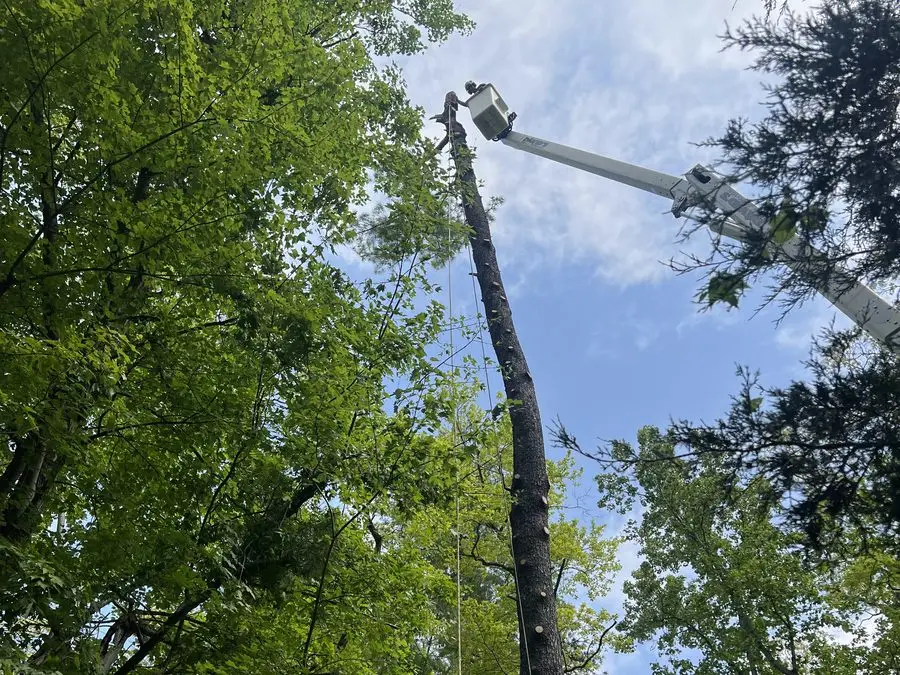
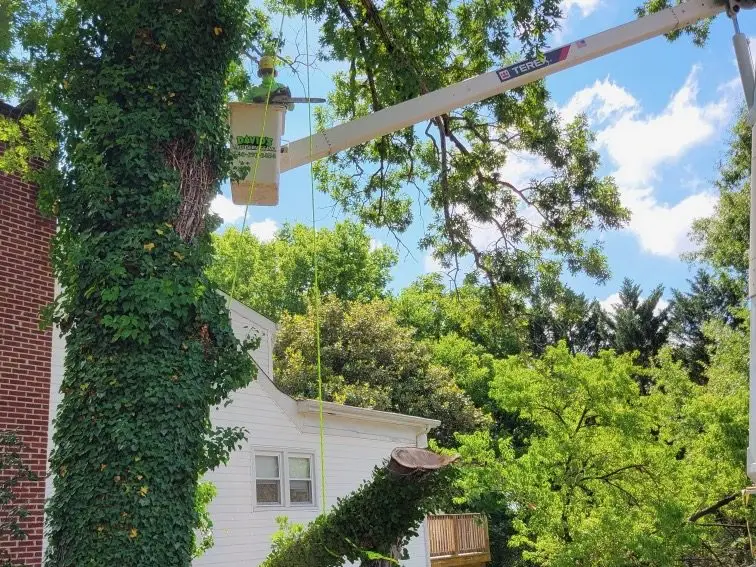
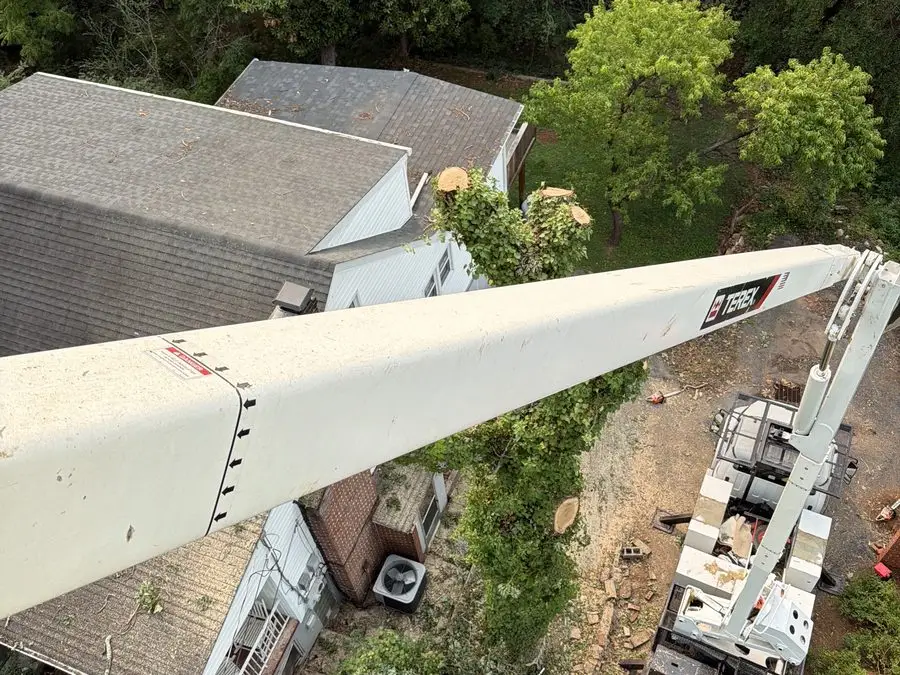
What we actually do when we prune
- Deadwood removal. Anything dead, dying or broken comes out. This is the single highest-value thing you can do for a mature tree over a house or driveway.
- Structural pruning. Young and middle-aged trees get shaped so they grow one strong leader instead of two competing stems. Two stems growing tight together is what splits in an ice storm.
- Clearance. Limbs off the roof, off the gutters, out of the driveway, away from the service line to your house.
- Thinning. Selective removal so wind passes through the canopy instead of pushing against it. Done properly this reduces the sail effect without stripping the tree.
- Raising. Lower limbs off, so you can mow under it or see past it.
What we won't do
We don’t top trees. Topping means cutting the crown back to stubs. It’s still common and it’s still wrong. A topped tree responds by throwing out weak, fast-growing shoots attached to decaying stubs, and in five to ten years you have a bigger hazard than you started with, plus a tree that looks like a hat rack.
If a tree is genuinely too big for its spot, the honest answers are proper reduction pruning or removal. We’ll tell you which, and we’ll tell you if the answer is that you should leave it alone.
When to prune around here
For most hardwoods, late winter is ideal. The tree is dormant, the structure is visible with the leaves off, and it heals fast in spring.
That said, dead and hazardous wood comes out whenever you find it. There is no season for a dead limb over a driveway.
A few timing notes for this area: oaks are best pruned in the dormant season rather than spring, to avoid attracting the beetles that spread oak wilt. Storm-damaged wood gets cleaned up immediately regardless of the calendar. And it’s worth getting overhanging limbs handled before ice season in December rather than after.
How it goes
- We look at the tree. David tells you what it needs, and what it doesn’t.
- You get a price. Before anything starts, cleanup included.
- We climb or bring the bucket. Whichever suits the tree and the access.
- We prune to the collar. Proper cuts at the branch collar so the tree can seal them. No stubs, no flush cuts, no topping.
- We clean up. Brush chipped and gone, yard raked.
Frequently Asked Questions
How often should a tree be pruned?
Will pruning hurt the tree?
Can you just cut the limbs over my roof?
My neighbor's tree hangs over my property. What can I do?
Do you clean up the brush?
Is trimming cheaper than removal?
Get a free estimate
Tell us what you are looking at and we will come price it. If a tree is down right now, call our 24/7 emergency line, 540-871-8338, instead.
Call and we'll come look at it
If you’re not sure whether a tree needs pruning or just looks untidy, ask. It’s a free estimate and a straight answer.