Land Clearing
Land clearing is taking a piece of ground from grown-up woods, brush or scrub to something you can build on, farm, fence or see across. David’s Tree Service clears lots and fields across Lynch Station, Lynchburg and the surrounding counties, and has been doing it since 1993.
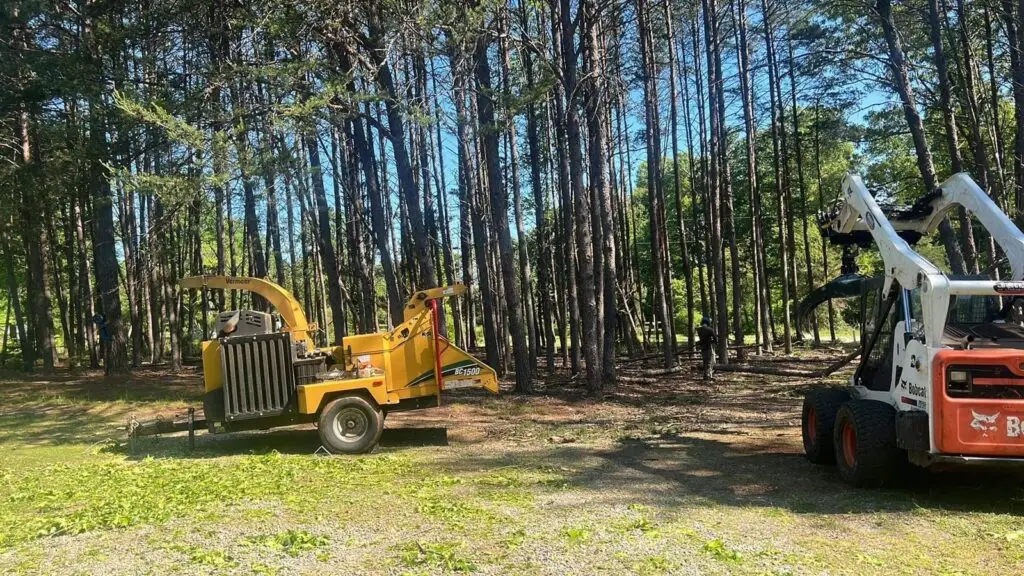
Land clearing in Lynch Station and central Virginia
Land clearing is taking a piece of ground from grown-up woods, brush or scrub to something you can build on, farm, fence or see across. David’s Tree Service clears lots and fields across Lynch Station, Lynchburg and the surrounding counties, and has been doing it since 1993.
Call 540-297-3454 and we’ll come walk the property with you.
What we clear, and what for
- Building lots. Clearing a house site, a driveway run and a septic area out of standing timber.
- Fence lines. Cutting a clean line so fence can actually be run, which on an old boundary can mean years of growth.
- Pasture and field reclamation. Fields that have gone to cedar, locust and briar come back with a lot of work, and that’s a common job around here.
- Views. Selective clearing to open a sightline, especially on the slopes around Smith Mountain Lake.
- Overgrowth around structures. Barns, outbuildings and equipment that the woods have crept up on.
- Storm cleanup at scale. When a storm goes through a stand of trees rather than a single one.
Selective clearing is usually the better answer
Taking everything off a lot is sometimes necessary and usually a mistake. The trees you leave are worth more than the ones you take, and a lot cleared to bare dirt has problems that show up later.
Erosion. Bare slope in central Virginia moves when it rains, and lakefront lots move into the lake.
Wind exposure. This is the one people don’t expect. A tree that spent forty years in the middle of a stand has never had to stand up to wind on its own. Clear everything around it and you’ve left a tree with a canopy shaped for shelter and a root system that never needed to anchor. Those are the trees that come down in the first big storm after clearing.
Shade and value. Mature hardwood near a house is worth keeping. It’s also the thing you can’t buy back.
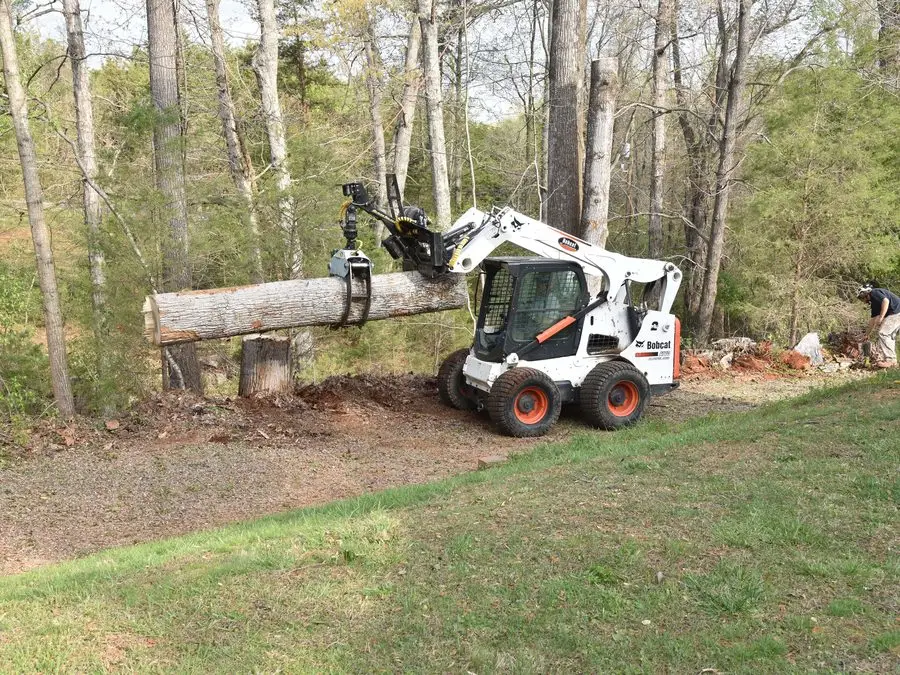
We’ll walk it with you and mark what should stay. Usually that’s the sound hardwoods with good structure, and what goes is the brittle stuff — the locust, the crowded pine, the leaning cedar and the understory scrub.
How it goes
- We walk the property with you. You tell us what it’s for. That changes everything about how we clear it.
- We mark it out. What stays, what goes, and where the debris will be handled.
- You get a price. Clearing is priced by the job after seeing it. Acreage alone doesn’t tell you much — terrain, density and what happens to the material matter more.
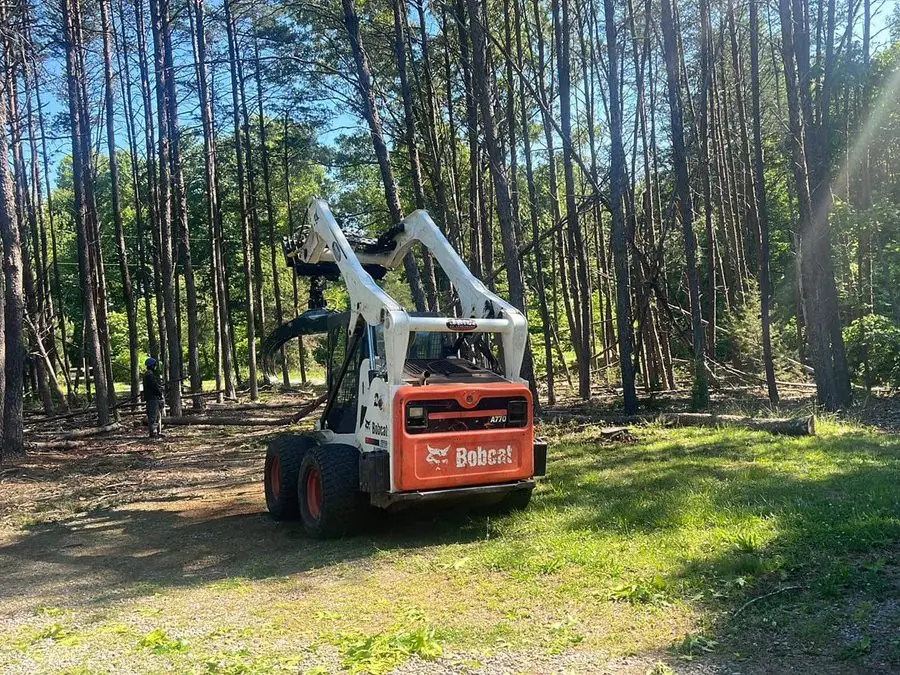
- We clear. Trees down, brush out, stumps ground if you need the ground workable.
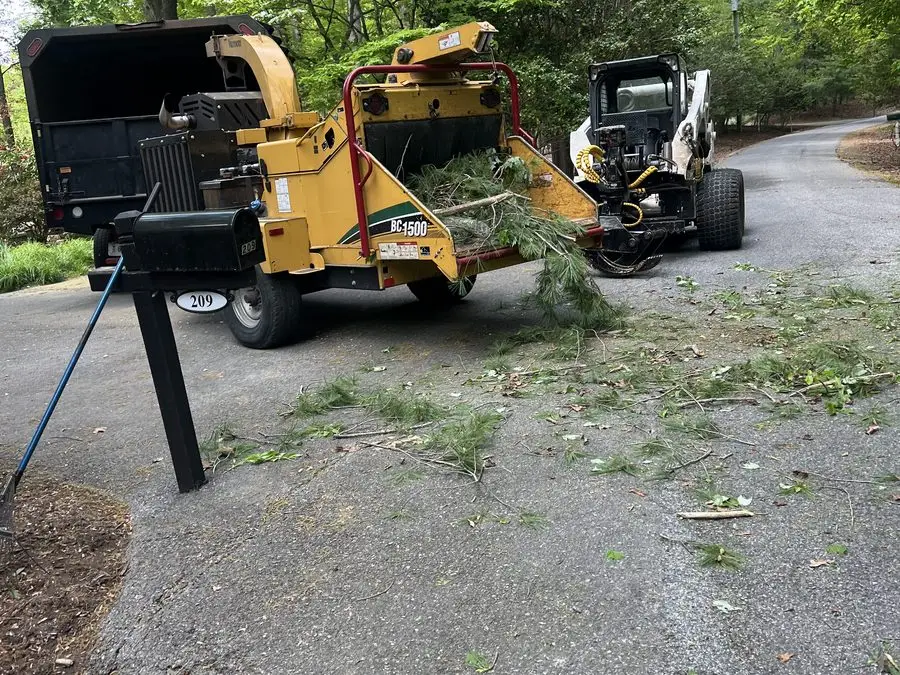
- We deal with the debris. Chipped, hauled, stacked as firewood, or piled for burning if that’s what you want and it’s permitted.
What drives the cost
- How thick it is. Open field with scattered cedar is a different job from closed-canopy woods.
- Size of what’s standing. Mature timber takes longer and needs different equipment than fifteen years of scrub.
- Terrain and access. Steep ground, wet ground and no way in for equipment are the three things that add the most time.
- What happens to the material. Chipping on site, hauling off and burning are all different costs.
- Stumps. If the ground has to be workable or mowable, stumps have to be ground. If it’s going back to pasture and you can steer around them, sometimes they don’t.
- Selective versus complete. Selective takes longer per acre, because everything comes out around what’s staying.
Frequently Asked Questions
Do I need a permit?
Can I keep the timber?
Can I burn the brush?
How long does an acre take?
Will you grind the stumps too?
Can you clear just enough for a view?
Get a free estimate
Tell us what you are looking at and we will come price it. If a tree is down right now, call our 24/7 emergency line, 540-871-8338, instead.
Call and we'll come walk it
Land clearing is hard to price from a description. Call and we’ll come out, walk the ground with you, and tell you what it takes.